Nobody Left Behind: How Adult Game Devs Are Out-Designing the Mainstream on Accessibility
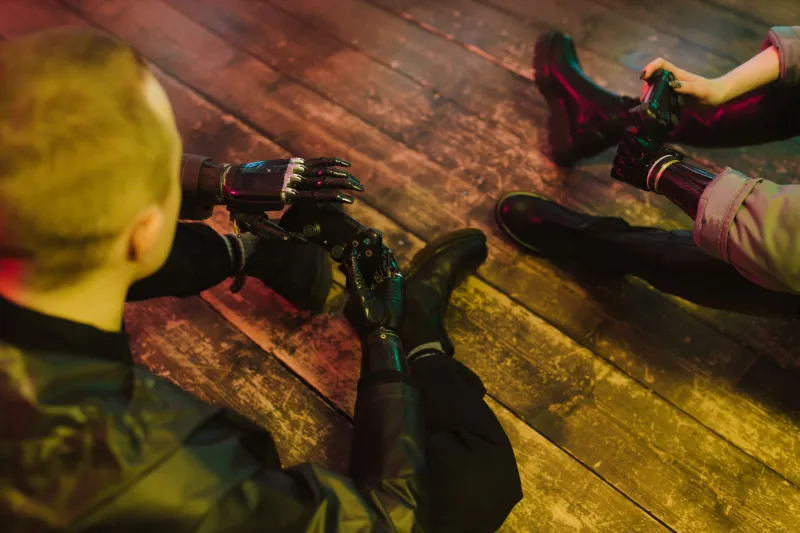
Here's something that might genuinely surprise you: some of the most forward-thinking accessibility work happening in games right now isn't coming out of a AAA studio in Seattle or a well-funded indie darling with a GDC talk. It's coming from adult game developers — small teams, often self-funded, building experiences for a community that's historically been told it doesn't deserve a seat at the table.
And somehow, those developers are doing it better.
We're not talking about slapping a subtitle toggle into the options menu and calling it a day. We're talking about granular difficulty sliders, full controller remapping, dyslexia-friendly font options, colorblind modes with multiple filter types, and content pacing controls that let players dictate how fast or slow a narrative moves. Features that plenty of $70 mainstream releases still haven't figured out.
So what's actually going on here?
The Freedom That Comes From Not Having a Publisher
One of the clearest explanations is structural. Adult game developers — particularly those distributing through platforms like Patreon, itch.io, or their own storefronts — operate without the kind of publisher oversight that often sidelines accessibility work in mainstream development. There's no milestone review where a producer cuts the colorblind mode because it's not in the original scope. There's no legal team worried about setting a precedent.
What there is, pretty consistently, is a direct line between developer and player. Community forums, Discord servers, Patreon comment threads — these are spaces where players with disabilities aren't shy about asking for what they need. And developers who depend on that community for their income have a strong incentive to actually listen.
Developers who've shipped titles on platforms popular with adult gaming communities have noted that accessibility requests consistently rank among the most common feedback they receive — not bug reports, not content requests, but players explaining that a certain font size makes the game unplayable for them, or that they can't distinguish between two UI colors because of deuteranopia. That kind of direct, specific feedback is gold for a small team, and acting on it builds genuine loyalty.
What Good Actually Looks Like
Let's get specific, because vague praise doesn't tell you much.
Colorblind support in adult games has gotten genuinely sophisticated. Rather than a single "colorblind mode" toggle that applies a generic filter, some titles now offer separate presets for protanopia, deuteranopia, and tritanopia — the three most common types of color vision deficiency — with the option to fine-tune saturation and contrast independently. That's more granular than what you'll find in most mainstream shooters.
Controller remapping, similarly, has evolved past the basics. Some adult visual novels and RPGs now support full per-button remapping across keyboard, mouse, and gamepad simultaneously, with profiles you can save and switch between. For players with motor disabilities who rely on adaptive controllers or one-handed setups, that kind of flexibility is the difference between being able to play and not.
Difficulty customization deserves its own conversation. The adult gaming space has long been comfortable with the idea that players come for different reasons — some want narrative immersion, some want mechanical challenge, some just want to see where the story goes without hitting a wall. That comfort with player autonomy has translated into unusually robust difficulty systems. Skip-combat options, adjustable enemy scaling, toggleable fail states — these aren't dumbed-down modes, they're design choices that respect the fact that players have different relationships with challenge.
The Philosophical Angle Nobody's Talking About
There's something worth unpacking about why the adult gaming space has developed this particular sensitivity. Part of it is practical, as we covered. But part of it is cultural.
Adult gaming communities have historically existed at the margins of mainstream gaming discourse. Players in these spaces are used to advocating for themselves, used to being told their preferences don't count, used to finding workarounds because the mainstream wasn't built with them in mind. That experience creates a certain empathy — a baseline awareness that "default" settings always reflect somebody's assumptions about who the player is.
When you've spent years navigating a hobby that treats you as an afterthought, you tend to notice when other people are being treated as afterthoughts too. That's not a universal truth, obviously, but it shows up consistently enough in how these communities talk about accessibility that it's worth naming.
Developers who come up through these communities often carry that awareness into their design work. Accessibility isn't a PR move for them — it's a reflection of how they already think about their audience.
The Technical Lift Is Smaller Than People Think
One argument you hear against accessibility features — especially from small studios — is that implementation is too expensive or technically complex. And sure, building a full screen reader integration from scratch is a significant undertaking. But the features that make the biggest difference for the most players? Often surprisingly lightweight.
Colorblind filters, for instance, can be implemented as post-processing shaders with relatively minimal performance overhead. Remappable controls, if you're building your input system correctly from the start, are mostly a UI problem rather than a code architecture problem. Scalable UI text is a stylesheet issue. None of this is trivial, but none of it requires a dedicated accessibility team or a six-figure budget.
The bigger barrier, honestly, is just deciding it matters. And that's where adult game developers — with their close community ties and direct feedback loops — have an edge over studios where accessibility work has to fight for prioritization against feature development and marketing.
What the Mainstream Could Learn
The irony here is pretty rich. The segment of gaming that gets the least coverage, the least critical attention, and the most cultural side-eye is quietly doing some of the most player-respecting design work in the industry.
That's not an accident, and it's not charity. It's the result of developers who actually talk to their players, who operate without the bureaucratic friction that kills good ideas in larger organizations, and who've built communities where people feel comfortable asking for what they need.
Mainstream studios spend millions on user research and still ship games that alienate players with disabilities at launch. Adult game developers spend afternoons reading Discord feedback and ship updates that fix the exact problem someone described three days ago.
There's a lesson in there. Several, actually.
The accessibility revolution in adult gaming isn't a headline moment — it's a slow accumulation of small decisions made by developers who genuinely give a damn about who's playing their games. And for the players who've been waiting for the industry to catch up to them, it's long overdue recognition that their experience matters.
Every player deserves a game that was built thinking about them. Adult game developers, of all people, seem to understand that better than most.